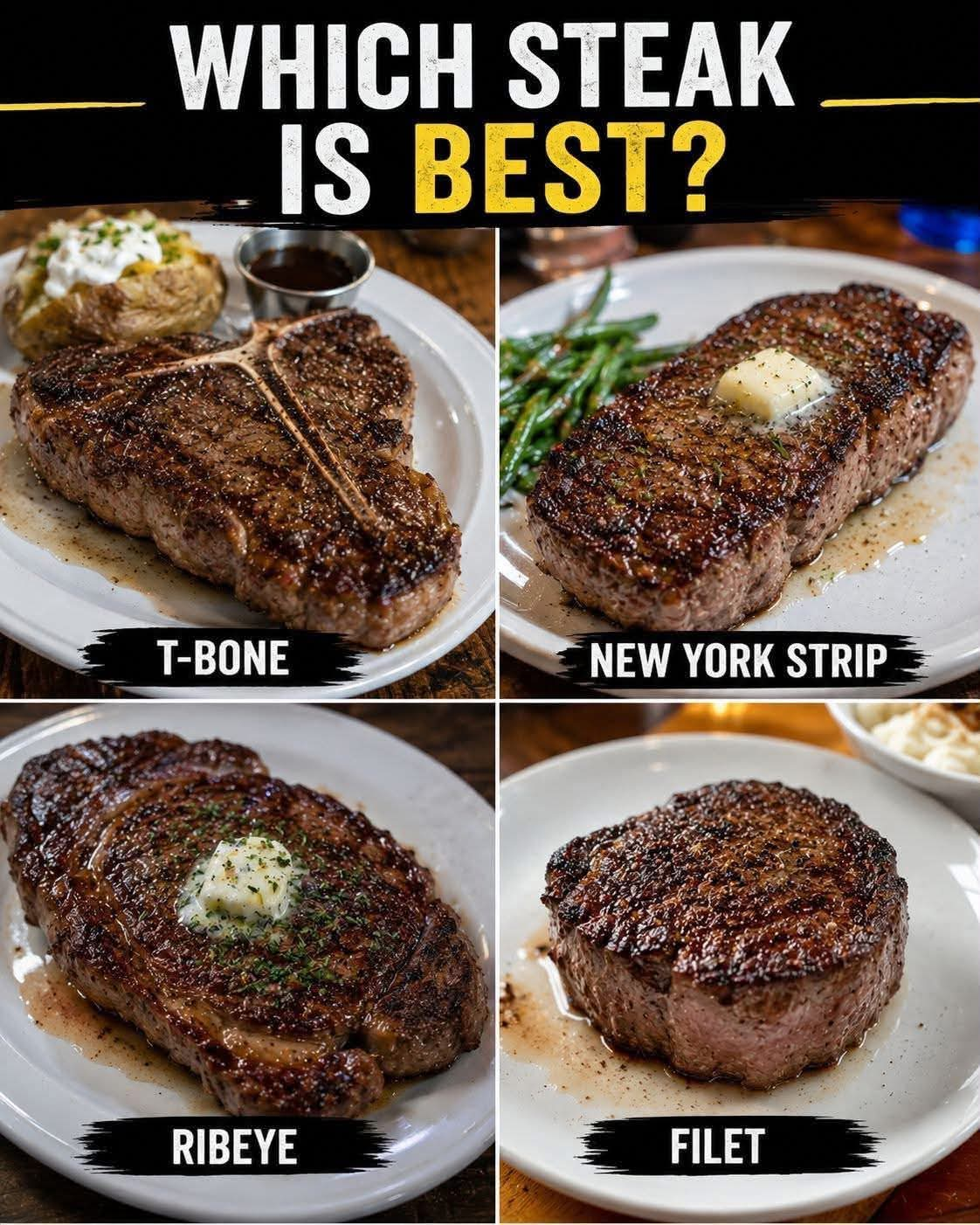
Article: The Ultimate Steak Showdown – Which Cut Reigns Supreme?
Walk into any steakhouse and you’ll be faced with this exact dilemma. Each of these four cuts has its own personality, texture, and flavor profile.
· The T-Bone: This is the best of both worlds. It’s essentially two steaks in one—a New York Strip on one side of the bone and a Filet on the other. It’s great for those who can’t decide, but it can be tricky to cook evenly because the two sides have different textures.
· The New York Strip: The classic steak lover’s steak. It has a firm, meaty texture with a good amount of marbling, offering a robust, beefy flavor without being overly fatty.
· The Ribeye: The king of flavor. Ribeye is heavily marbled with fat, which melts during cooking to create an incredibly rich, juicy, and buttery bite. If you prioritize flavor over everything else, this is your steak.
· The Filet Mignon: The most tender cut of all. It comes from the tenderloin and has very little fat or marbling, meaning it has a milder flavor. It is prized for its melt-in-your-mouth texture rather than its beefiness.
The Verdict:
· For Flavor: Ribeye
· For Tenderness: Filet Mignon
· For a Classic Steak Experience: New York Strip
· For Indecisive Eaters: T-Bone
Full Recipe: The Perfect Pan-Seared Steak (Works for Any Cut)
No matter which cut you choose, the cooking method remains the same. This is the foolproof method for achieving a deep, golden crust and a perfectly cooked interior.
Prep Time: 30 minutes (to bring to room temperature)
Cook Time: 6-10 minutes (depending on thickness)
Yield: 1 steak
📝 Ingredients
· Steak: 1 thick-cut steak (T-Bone, NY Strip, Ribeye, or Filet).
· Salt: Coarse kosher salt or flaky sea salt.
· Black Pepper: Freshly cracked.
· High-Smoke Point Oil: 1 tablespoon (avocado oil or grapeseed oil).
· Butter: 2 tablespoons (unsalted).
· Aromatics: 2 cloves of garlic (smashed) and a sprig of fresh rosemary or thyme.
🥣 Instructions
Step 1: Prep the Steak (Crucial Step)
- Take the steak out of the fridge 30-45 minutes before cooking. A room-temperature steak cooks more evenly.
- Pat the steak completely dry with paper towels. Moisture is the enemy of a good crust.
- Season generously on both sides with salt and pepper.
Step 2: Heat the Pan
- Place a cast-iron skillet over medium-high heat.
- Add the high-smoke-point oil. Wait until the oil is shimmering and just beginning to smoke.
Step 3: Sear the Steak
- Carefully place the steak in the hot pan. Do not move it for 3-4 minutes. This creates the beautiful dark crust.
- Flip the steak and cook for another 3-4 minutes for medium-rare (adjust time based on thickness).
Step 4: Baste with Butter and Aromatics
- In the last minute of cooking, reduce the heat to medium-low.
- Add the butter, smashed garlic, and herbs to the pan.
- Tilt the pan slightly and use a spoon to continuously spoon the foaming butter over the steak (basting). This adds incredible flavor and helps the steak cook evenly.
Step 5: Rest (Do Not Skip!)
- Remove the steak from the pan and place it on a cutting board.
- Let it rest for 5-10 minutes. This allows the juices to redistribute. If you cut it immediately, the juices will run out, and the steak will be dry.
Step 6: Serve
- Slice against the grain (if applicable) and serve with your favorite sides like mashed potatoes or roasted green beans.
💡 Chef’s Pro Tips:
· Use a Meat Thermometer: The best way to know when your steak is done is by temperature.
· Medium-Rare: 130°F – 135°F (54°C – 57°C)
· Medium: 140°F – 145°F (60°C – 63°C)
· The Butter Trick: Basting with butter at the end is the secret to a restaurant-quality steak. It adds richness and a beautiful golden color.
· Thick vs. Thin: If your steak is very thin (under 1 inch), you may need to cook it for less time. If it’s very thick (over 1.5 inches), you may need to finish it in the oven at 400°F (200°C) to ensure it cooks through without burning the outside.