Have you ever woken up in the middle of the night with a burning sensation in your chest, or a bitter taste in your mouth? Your sleeping position might be the culprit.
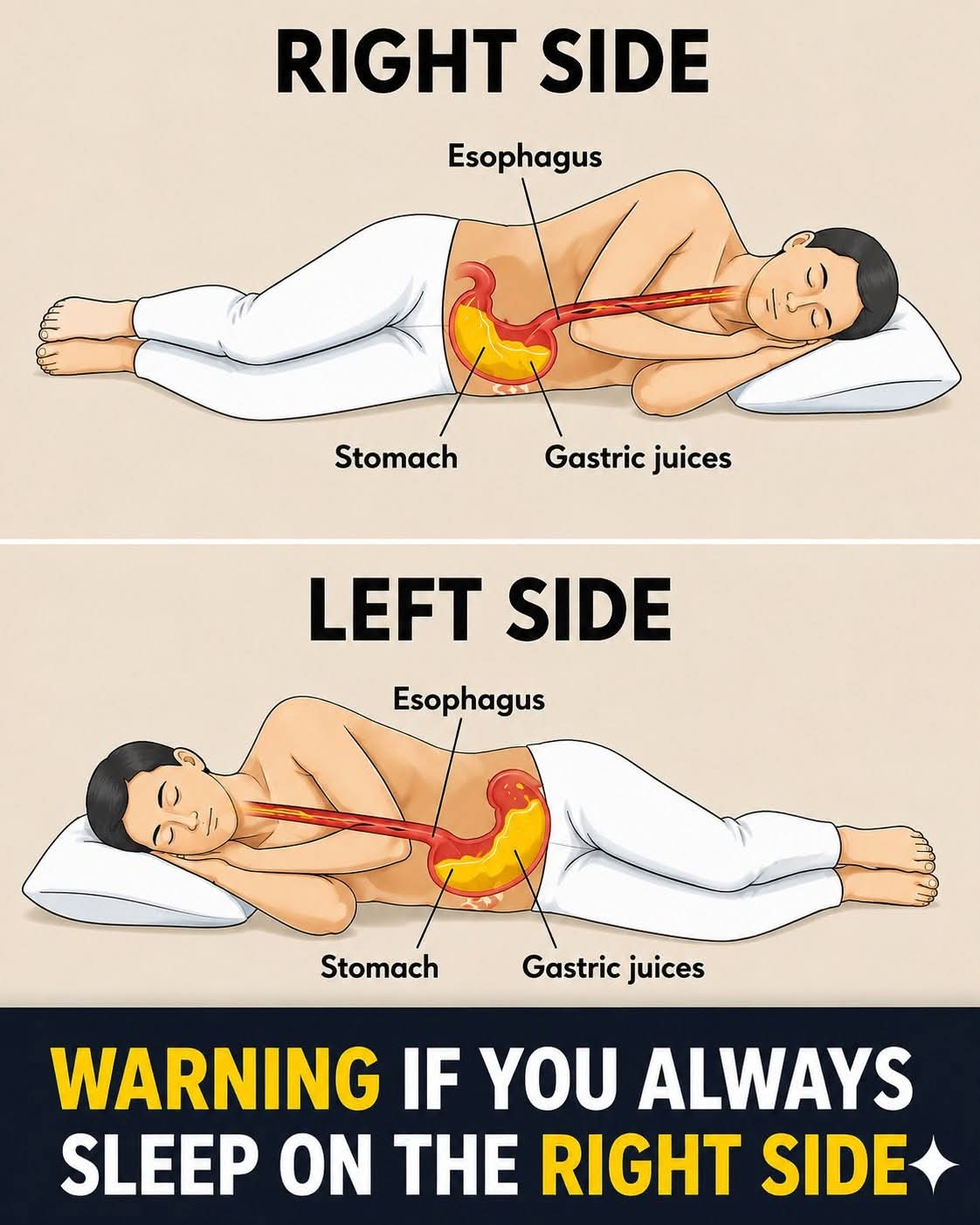
The infographic you shared is based on accurate medical anatomy. Here is the breakdown of what is happening in the diagrams:
- Sleeping on the Right Side (The “Acid Highway” – Top Image)
· The Anatomy: Your stomach is a J-shaped organ located slightly to the left of your body’s center. When you sleep on your right side, your stomach is physically positioned above the lower esophageal sphincter (the valve that connects your stomach to your throat).
· The Result: Gravity pulls your stomach acid directly toward that valve. If the valve is slightly weak or relaxed during sleep, the acid literally “leaks” up into your esophagus. This is why right-side sleepers have a much higher risk of nighttime acid reflux, indigestion, and regurgitation.
- Sleeping on the Left Side (The “Safe Zone” – Bottom Image)
· The Anatomy: When you sleep on your left side, your stomach is positioned below the esophageal valve.
· The Result: Your stomach contents and gastric juices pool at the bottom of the stomach, far away from the valve. Gravity works in your favor, keeping the acid in your stomach where it belongs. This is the recommended sleeping position for people suffering from GERD (Gastroesophageal Reflux Disease) or frequent heartburn.
- What about sleeping on your back?
Sleeping flat on your back is generally fine, but it can cause the tongue and soft palate to collapse, worsening snoring or sleep apnea. For digestion, back sleeping is neutral—it keeps acid level, but doesn’t keep it safely tucked away like the left side does.
Bonus “Recipe”: The Soothing Bedtime Anti-Reflux Drink
If you suffer from nighttime heartburn, adjusting your sleeping position is step one. Step two is changing what you consume right before bed.
This simple, warm, soothing drink is alkaline and helps coat the stomach lining, neutralizing excess acid before you lay down. Note: Drink this 30-60 minutes before bed, not right before you lie down, to give your stomach time to start digesting.
Prep Time: 2 minutes
Yield: 1 serving
📝 Ingredients
· Warm Water (not boiling): 1 cup (8 oz).
· Raw Apple Cider Vinegar (with “The Mother”): 1 teaspoon (While acidic on its own, it signals the stomach to balance its own pH, often reducing reflux).
· Lemon Juice: 1 teaspoon (freshly squeezed).
· Manuka Honey or Raw Honey: 1 teaspoon (Soothes the esophageal lining).
· Fresh Ginger: A thin slice, peeled, or a pinch of ginger powder (Anti-inflammatory and aids digestion).
🥣 Instructions
- Heat your water until it is warm to the touch (like a comfortable tea temperature).
- Pour the warm water into a mug.
- Stir in the Apple Cider Vinegar, lemon juice, and honey until fully dissolved.
- Drop in the slice of fresh ginger.
- Sip this slowly about 30 minutes before getting into bed. It will help calm your digestive system.
💡 General Health Tips for Digestive Sleep:
· Eat early: Try to finish your last meal at least 3 hours before bedtime. A full stomach presses on the esophageal valve, making leakage more likely regardless of what side you sleep on.
· Elevate your head: If you are a chronic right-side sleeper, consider putting a small wedge pillow under your head and upper back. Elevating the head by 6-8 inches uses gravity to keep acid out of the esophagus.
· Avoid triggers: Steer clear of heavy, spicy, greasy, or tomato-based foods in the 4 hours leading up to sleep.
Disclaimer: This article provides informational content based on the image provided. If you suffer from chronic acid reflux, GERD, or severe indigestion, you should consult a medical professional for a personalized treatment plan.