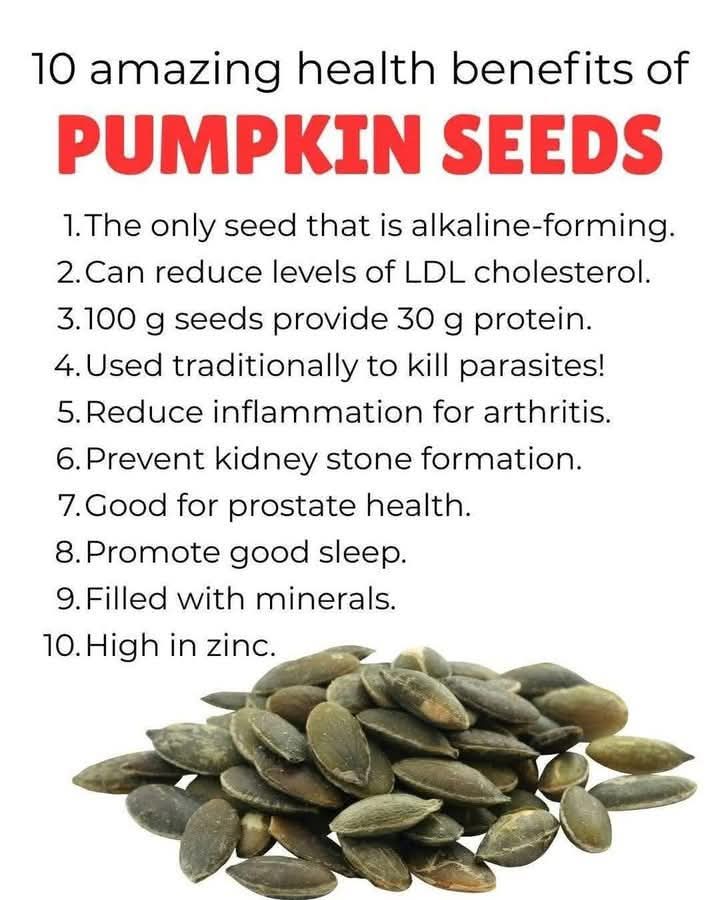
· “The only seed that is alkaline-forming”: This is a misleading claim rooted in the alkaline diet theory. The human body tightly regulates its own blood pH regardless of the food you eat, and no single seed can change that.
· Can reduce LDL cholesterol: This is supported by evidence. Pumpkin seeds are rich in phytosterols, plant compounds that can help lower LDL (bad) cholesterol levels by blocking its absorption in the intestines.
· 100g seeds provide 30g protein: This is accurate. Pumpkin seeds are an excellent plant-based protein source, containing around 30 grams of protein per 100 grams, as noted in search results .
· Used traditionally to kill parasites: This is based on traditional use. Pumpkin seeds have a long history in folk medicine for this purpose, though modern scientific evidence for their effectiveness in humans is limited.
· Reduce inflammation for arthritis: This is plausible. Their high antioxidant content may help reduce inflammation, but they are not a treatment for arthritis.
· Prevent kidney stone formation: This is not well-supported by strong scientific evidence. While some nutrients in pumpkin seeds are beneficial, there is no definitive proof they prevent kidney stones.
· Good for prostate health: This is supported by research, particularly for Benign Prostatic Hyperplasia (BPH), due to the high zinc content and other compounds.
· Promote good sleep: This is biologically plausible. Pumpkin seeds are a source of tryptophan, an amino acid the body converts into serotonin and melatonin, which regulate sleep .
· Filled with minerals: This is accurate. They are a great source of magnesium, iron, and zinc .
· High in zinc: This is accurate. Pumpkin seeds are one of the best plant-based sources of zinc, essential for immunity, skin health, and hormone balance .
🥣 Recipe: Simple Roasted Pumpkin Seeds
The most delicious way to enjoy these benefits is by roasting raw pumpkin seeds.
· Ingredients:
1 cup raw pumpkin seeds,
1 teaspoon olive oil, and a pinch of sea salt.
· Instructions:
Preheat your oven to 350°F (175°C). Toss the seeds with oil and salt, spread them on a baking sheet, and roast for 10-12 minutes until fragrant. Let them cool before enjoying .
💡 Chef’s Pro Tips
· How to Eat: Enjoy them raw or lightly roasted as a snack, or sprinkle them over salads, yogurt, or oatmeal .
· Portion Control: While nutritious, they are calorie-dense. A handful (about 1 ounce) per day is a great serving size .
· Best Time to Eat: They make a perfect mid-morning or afternoon snack to keep you energized .
In short, pumpkin seeds are a fantastic addition to a balanced diet, but they are not a magic bullet. Focus on variety and consistency for long-term health.