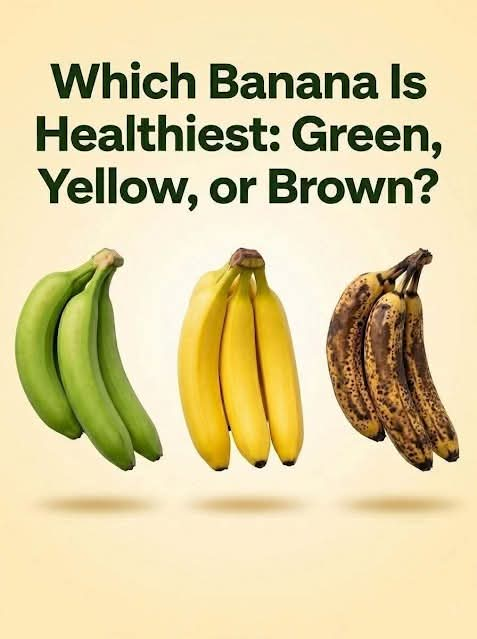
The color of a banana isn’t just about ripeness—it changes its nutritional profile significantly. There isn’t one “healthiest” color; rather, the best choice depends on your health goals, whether that’s stable blood sugar, gut health, or quick energy.
🍌 How Ripeness Changes Your Banana
· Green (Unripe): High in resistant starch (a type of fiber), which helps feed good gut bacteria and leads to a slower, gentler rise in blood sugar. It also keeps you feeling full longer. However, it’s firmer and can be harder to digest for sensitive stomachs.
· Yellow (Ripe): The starch has converted to sugar, making it sweet and easy to digest—great for quick energy. This stage offers a good mix of fiber, potassium, and vitamins B6 and C.
· Brown-Spotted (Very Ripe): Almost all starch is now sugar, so it’s the sweetest and softest. It contains the highest levels of antioxidants and is easiest on digestion, making it a good choice for older adults or those with sensitive stomachs. Keep in mind it may cause a faster blood sugar spike.
💡 Practical Tips
· For Blood Sugar Management: Choose green or slightly green bananas, and pair them with protein or healthy fats (like Greek yogurt or nut butter) to further slow digestion.
· For Gut Health: Green bananas are ideal for their prebiotic fiber.
· For Quick Energy: A yellow banana is a perfect pre-workout snack.
· For Baking or Smoothies: Use brown-spotted bananas for natural sweetness and moisture, and to reduce added sugar in recipes.
⚠️ A Note on Storage and Safety
The brown spots on a banana are simply a sign of natural ripening, not spoilage. As long as the flesh inside is intact, it is perfectly safe to eat. To slow down ripening, store bananas in a cool place or the refrigerator (the skin may darken, but the fruit stays fresh).
If you’d like a specific recipe that uses one of these stages—like a green banana smoothie for gut health or a brown banana bread—just let me know!