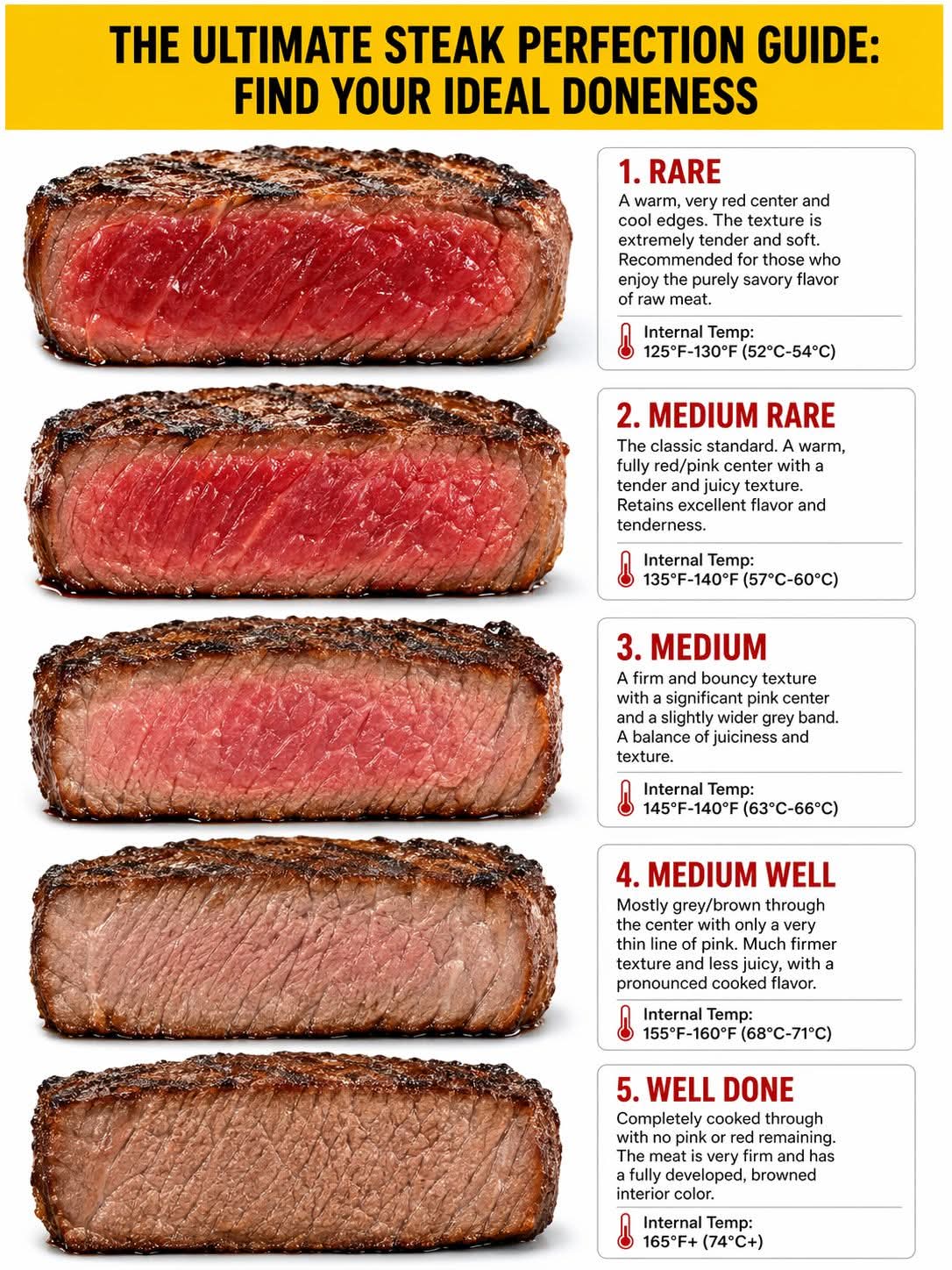
There is something undeniably captivating about a perfectly cooked steak. It is not just food on a plate, it is a sensory experience shaped by heat, timing, and precision. This visual guide captures that journey from raw to fully cooked with stunning clarity, allowing you to understand exactly what happens inside the meat as it transforms under fire. Every shade of red, pink, and brown tells a story of temperature, texture, and flavor.
At the very top of this guide, the bold golden banner sets the tone for what follows. This is not a casual overview. It is a refined exploration of steak perfection, presented with the kind of clarity you would expect from a high-end culinary publication. Against a flawless white background, each steak is isolated like a masterpiece, letting the textures and colors speak without distraction. The lighting is soft and deliberate, revealing every detail from the seared crust to the delicate fibers within.
Starting with rare, the steak appears almost untouched at its core. The center glows a deep, vibrant red, surrounded by lightly warmed edges. This stage preserves the pure, natural essence of the meat. The texture is incredibly soft, almost buttery, and the juices remain fully intact. It is a choice often favored by those who appreciate the raw, unfiltered character of high-quality beef. At this level, precision is critical because even a slight increase in heat begins to shift the entire structure.
Moving down to medium rare, widely considered the gold standard, the transformation becomes more balanced. The interior shifts into a warm red-pink hue, and the meat reaches a perfect harmony between tenderness and flavor development. Juices are still abundant, but the slight increase in temperature enhances the savory complexity. This is where many chefs aim, because it highlights both the quality of the cut and the skill of the cook.
The medium stage introduces more structure. The center becomes a pronounced pink, while a subtle grey band forms toward the edges. The texture is firmer, offering a satisfying bite while still retaining moisture. This level appeals to those who want a balance between softness and a more cooked feel, where the steak holds its shape without losing its juiciness entirely.
As the steak reaches medium well, the change becomes more dramatic. The interior is mostly brown with just a faint trace of pink remaining. The fibers tighten, and the meat becomes noticeably firmer. Juices begin to diminish, replaced by a deeper, more roasted flavor profile. This stage reflects a preference for a more thoroughly cooked steak while still preserving a hint of tenderness.
Finally, well done represents the full transformation. The interior is completely browned, with no trace of pink. The texture is firm throughout, and the flavor is fully developed through extended exposure to heat. While it sacrifices some moisture, it delivers a consistent, cooked-through experience that many people find comforting and familiar.
What makes this infographic so powerful is not just the information, but the visual storytelling. Each steak is captured with extraordinary detail. You can almost feel the crispness of the seared crust and the subtle resistance of the meat beneath a knife. Tiny droplets of juice glisten under the light, and the marbling reveals how fat melts and disperses flavor during cooking.
This guide is more than a reference. It is a tool for mastering your own cooking. Whether you are grilling over open flames, searing in a cast iron pan, or finishing in an oven, understanding these stages gives you control. Temperature is not just a number. It is the difference between a steak that is merely cooked and one that is truly exceptional.
For anyone passionate about food, this kind of knowledge elevates the entire experience. It helps you order with confidence at restaurants, cook with intention at home, and appreciate the craft behind every perfectly prepared steak. Each level of doneness has its own character, and there is no single correct choice. The ideal steak is the one that matches your personal taste.
So the real question becomes simple but engaging. Which one speaks to you the most? Do you prefer the bold, juicy intensity of rare, the balanced perfection of medium rare, the structured bite of medium, or the fully developed richness of well done?
Take a moment to look closely, compare each stage, and decide your favorite. Then share your choice, because great food is always better when it starts a conversation.